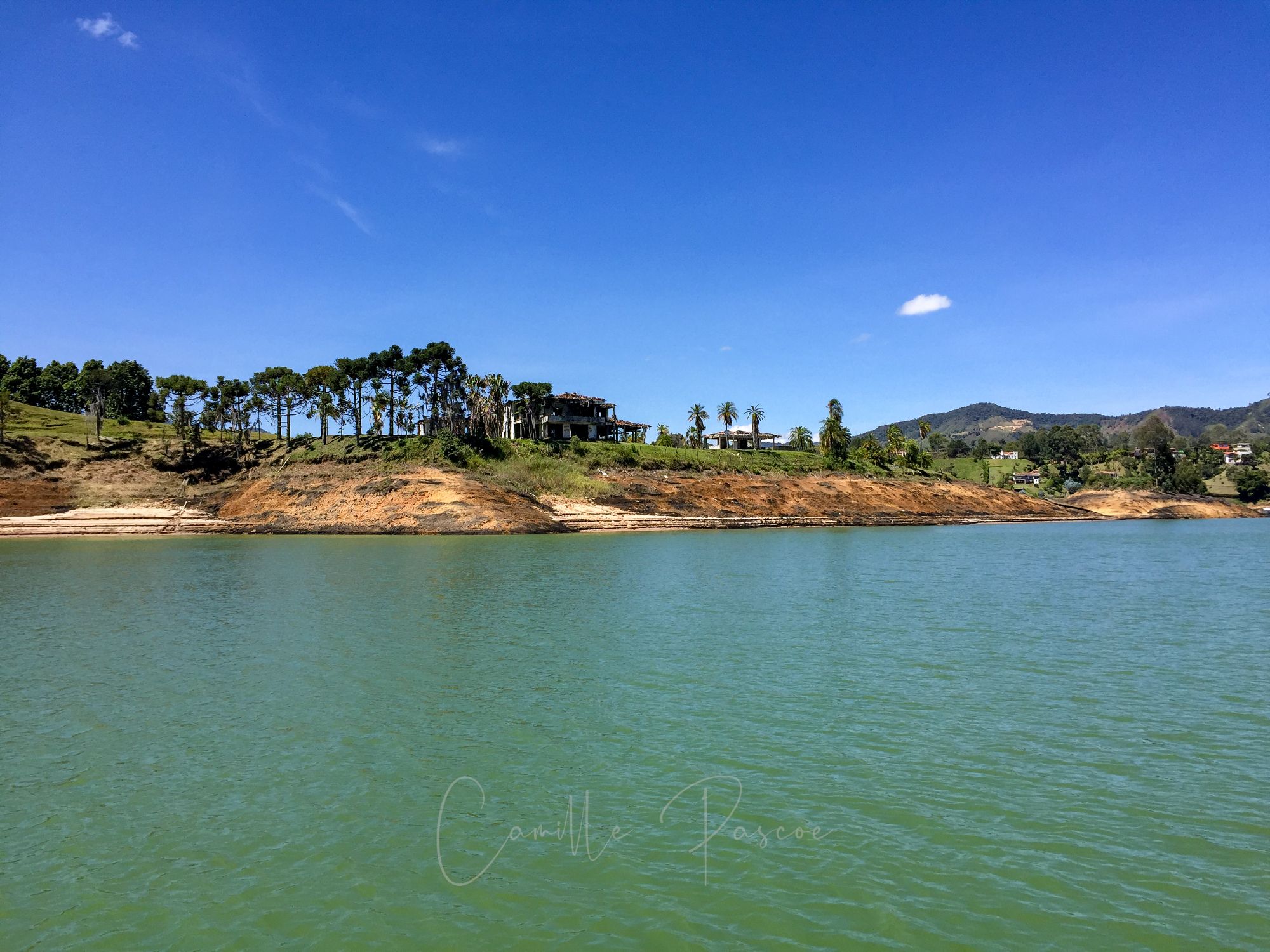
The Embalse (Reservoir) El Peñol was created through a hydroelectric dam project initiated by the Colombian government in the late 1960s and completed in the early 1970s. This ambitious project was primarily designed to meet the rising energy needs of the region.
Flooding a Town to Create a Reservoir
The creation of the reservoir required flooding the original town of El Peñol, relocating its inhabitants and transforming the valley into a water source. This reservoir now serves as a crucial part of Colombia’s energy infrastructure.

El Penol -Guatape
Hydroelectric Power Generation
The reservoir, along with the dam, forms part of a hydroelectric complex that produces a substantial amount of electricity for Medellín and nearby areas. By harnessing the power of water flow, the project has been a key driver of regional energy production for decades.
Flood Control
Beyond generating power, the reservoir also plays an important role in flood management. The dam helps regulate water flow during the rainy season. This action reduces the risk of flooding while improving the management of local water resources.

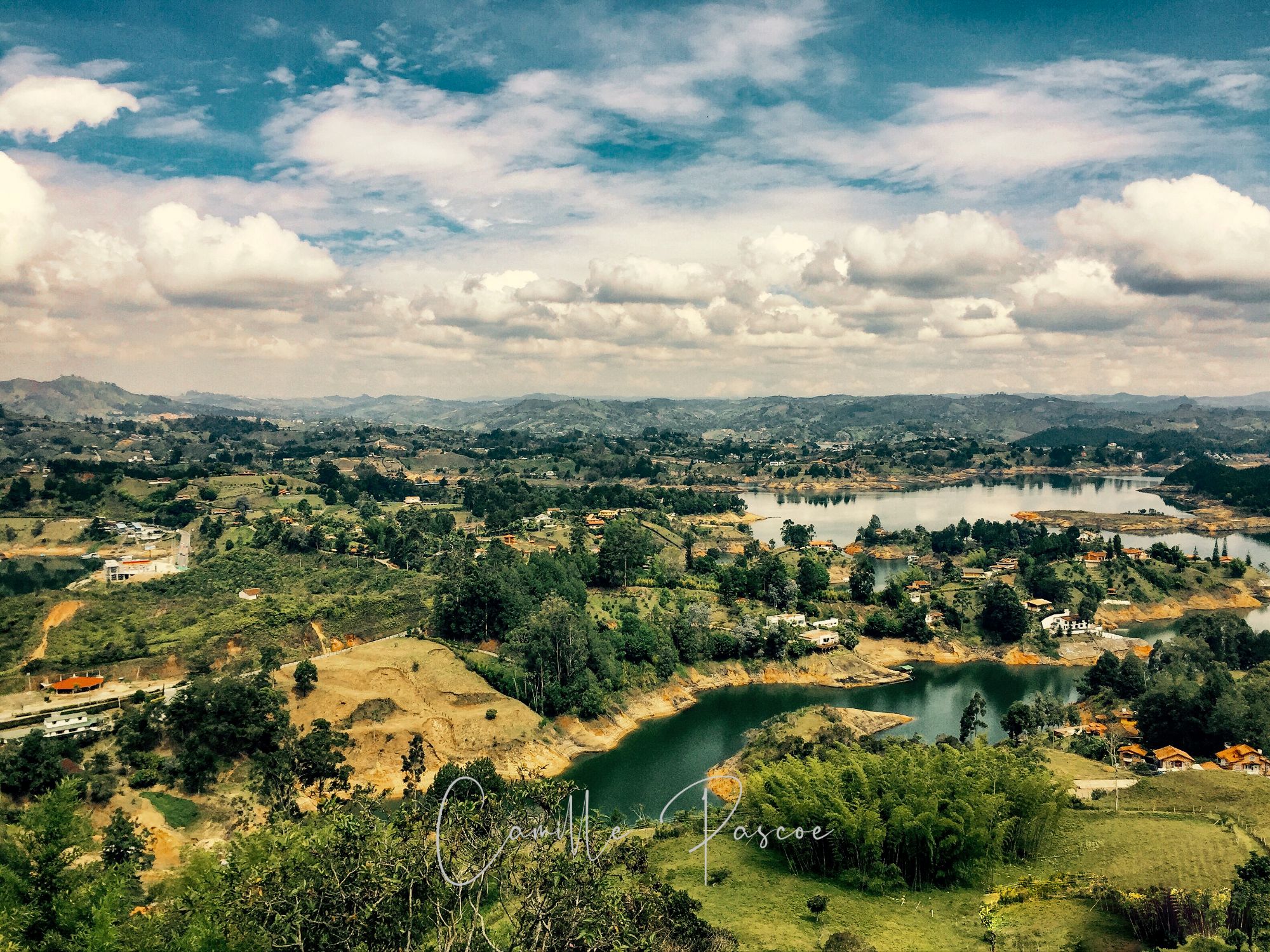
View Of El Penol from The Rock Of Guatape
Recreation and Tourism
The flooding of the valley had unintended positive outcomes as well. The reservoir became a hotspot for boating, fishing and water sports. With its picturesque islands and lush surroundings, it quickly grew into a thriving tourist destination, boosting the local economy.
Initially driven by the need for power generation and water control. The construction of Embalse El Peñol has also contributed to recreation and tourism in Guatapé. Today, it’s not only an essential power source but also a scenic retreat for locals and tourists.